
Air Management System
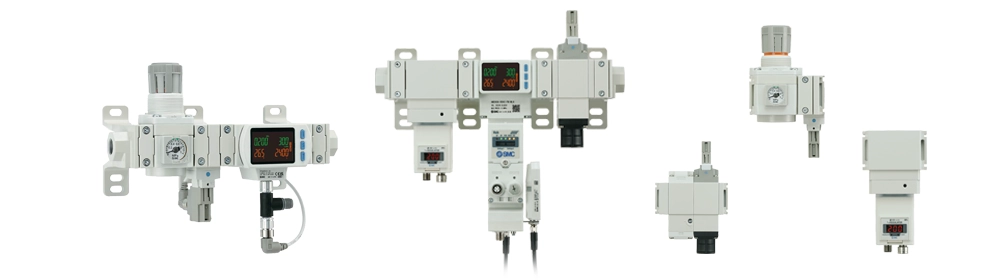
As much as 80% of the electrical energy consumed by air compressors is lost as heat or leaks. SMC’s Air Management System is the smart light switch for industrial pneumatics: tracking consumption, eliminating off-hour waste, and slashing air energy costs by 20%.
It acts as a digital energy manager for compressed air, “turning off the lights” and stopping money from leaking out of the building when workers are idle. If your compressor costs $25,000 a year to run without an AMS, a 20% energy savings returns $5,000 to your company's coffers in the first year alone. Every year after that is profit. Additionally, you meet your regional ESG compliance targets without adding staff.
TEST SMC’s Air Management System (AMS) in your factory for 120 days, for a nominal cost of $500, and see firsthand how easy it is to stop losing money to inefficient compressed air.
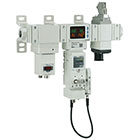
Air Management System (AMS), Assembly
This fully integrated, modular base unit automatically regulates and isolates compressed air to machinery during periods of inactivity. It provides pressure, flow, and temperature data to evaluate normal operating conditions. It offers OPC UA and fieldbus communications and can be configured with an electro-pneumatic or manual standby regulator. It reduces air consumption during idle times and enables preventative maintenance tracking without requiring extensive PLC reprogramming or downtime. It is sought by Plant managers, Automation controls engineers, and Corporate sustainability directors in the Automotive, Semiconductor, and Packaging industries because it solves the lack of real-time machine health data, saves money, and reduces CO2 emissions.
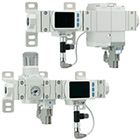

IO-Link Compatible Air Management System: AMS-X2044/X2045
This product is a simplified version of the AMS. It provides remote monitoring of air flow, pressure, and temperature exclusively via IO-Link. The X2044 model uses a standby regulator to maintain lower pressure during idle periods, while the X2045 uses a pressure relief valve to completely block air supply during extended idle periods. It is a reliable, cost-effective, and easy way to retrofit into existing FRL packages, making it ideal for the Machine Tooling and Robotics industries.
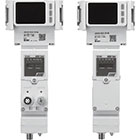
EXA1, Air Management Hub
The EXA1 is the heart of the Air Management System. Built upon the PF3A flow sensor, the hub generates exact flow, pressure, and temperature data. It can communicate wirelessly with base units to send fieldbus data to PLCs and OPC UA data to customer analytics systems and also includes an extra IO-Link port to connect additional devices. Because it provides complete wireless monitoring flexibility and deep analytics visualization, it’s perfect for smart factories, the life sciences, and high-tech electronics manufacturing. The EXA1 eliminates blind spots in understanding how much compressed air cells on the factory floor are using.
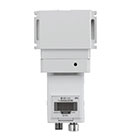
ITV-X399, Standby Electro-Pneumatic Regulator
The ITV-X399 is an electronic regulator that adds standby functionality to standard ITV setups with an M12 connection. It allows users to program a standby pressure electronically. Its non-relieving design lets the system decay naturally to standby mode, and it features a pressure ramp for controlled pressurization at start-up, eliminating the need for a separate soft-start device.
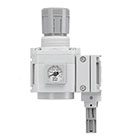
AR20S-50S, Standby Regulator
The AR20S-50S is a mechanical regulator that introduces a reduced standby pressure to the AMS. It features a simple locking knob to set an eco standby pressure and a non-relieving design, minimizing the volume of air required to bring the system back to full operational pressure. As a mechanical method to reduce air pressure during short idle times, it’s often purchased by facility engineers and managers looking for reliable, budget-friendly alternatives to digital controls.
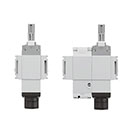
VP*46E-X660/X661, 3-Port Solenoid Valve, Residual Pressure Relief
The VP-X660/X661 series residual pressure relief valves completely shut off the air supply, putting the machine in isolation mode for long-term idle states. It includes a soft-start option to ensure controlled system initialization when paired with mechanical regulators. Available in both normally closed and normally open configurations, it eliminates 100% of air loss caused by micro-leaks in downstream equipment over long periods of inactivity. It’s favored by safety engineers and plant operations managers because it mitigates the safety hazards associated with uncontrolled dumping of residual pressure and the abrupt pneumatic surges upon machine start-up.
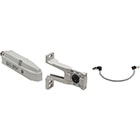
Air Management System Accessories
Air Management System accessories include a spacer, wireless adapter and cable.
From Raw Pneumatics to Real-Time Plant Intelligence
Your air compressor generates the raw compressed air for the plant.
The SMC Air Management System sits between the compressed air line and the machine as a smart gatekeeper. It regulates pressure, monitors air flow/temperature, and automatically lowers or shuts off air pressure when the machine is idle, enhancing efficiency during periods of inactivity.
CONSTANT COMPRESSED AIR PRESSURE, FLOW & TEMPERATURE MEASUREMENT |
||
| Smart Air & Energy Control | IIoT & Connectivity | Industrial Hardware Specs |
|
|
|
The AMS does not require reprogramming the user's PLC to operate, making integration both simple and cost effective. The high-resolution data is accessed by the PLC via fieldbus and SCADA packages via OPC UA.
The Air Management System is available in two basic configurations that vary by the standby regulator used. The A type utilizes the electro-pneumatic regulator while the B type uses the manual type standby regulator. Both types include an isolation valve and can be configured as remotes or as fieldbus connected bases. The hubs have an extra IO link port for connection to additional devices that can communicate through the system.
Video Demonstration of SMC’s Air Management System
The video below demonstrates how the AMC intelligently addresses the common, costly problem of wasted compressed air in manufacturing facilities. It shows how the system senses when production stops and automatically switches to standby mode, dropping the air pressure to the lowest required level. This action can cut a machine's air consumption by 50% which translates to reduced energy costs, greater energy efficiency, and lower CO2 emissions.
Beyond automated energy savings, the video highlights the AMC’s robust visualization and scalability features. Users can monitor real-time data for air pressure, flow, and temperature; keeping tabs on equipment status from both inside and outside the factory. Up to 10 remote units can connect securely via encryption to a single base hub up to 100 meters away, simplifying equipment layout and further reducing CO2 emissions associated with wiring work.
Visualization of Production Equipment Status (Diagram)
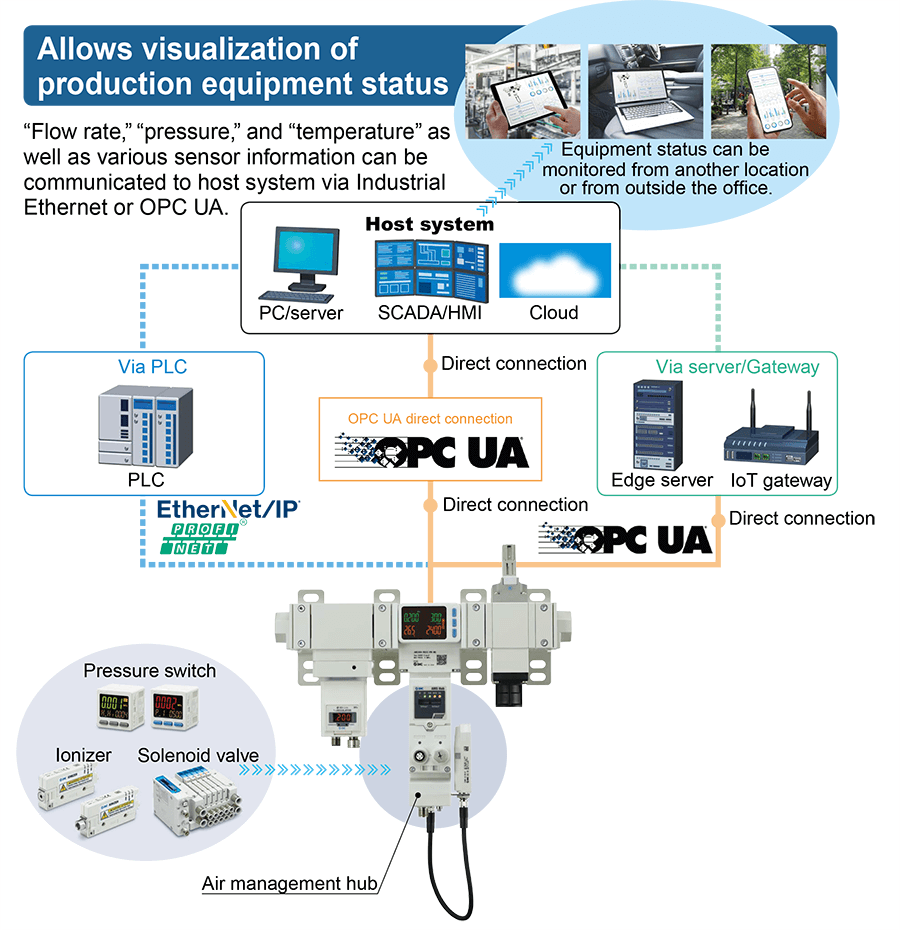
- Flow, pressure, temperature, and pressure sensor information can be communicated to the host system via Industrial Ethernet or the UA data communication protocol.
- Equipment status can be monitored and optimized from another location or from outside the office.
- Monitors the machine standby conditions (when production stops) and automatically decreases the pressure.
Compatibility with SMC Wireless Systems
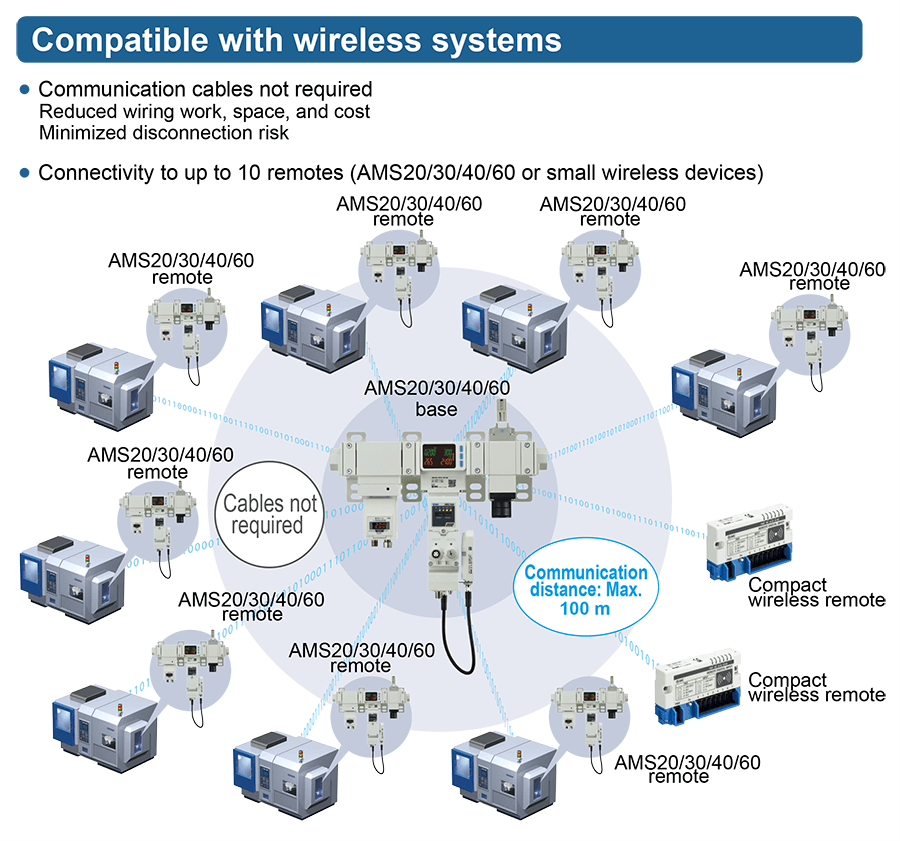
- No communication cable required between the base and the remote.
- Reduced wiring work, base, and cost
- Minimized disconnection risk
- AMC system (maximum 10) or compact wireless (maximum 15) remotes can be connected.
How Does It Work?
In an integrated compressed air system, air dryers, air tanks, and valve manifolds work sequentially to stabilize system pressure and deliver reliable, efficient pneumatic power. Upstream air dryers strip out moisture and contaminants to protect sensors and downstream equipment from corrosion. The air then flows into air tanks, which act as pressure buffers to smooth out line pulsation, store reserve energy, and prevent sudden pressure drops during peak machine demand. Together, this setup ensures air dryers run under reduced load during machine idle times, air tanks maintain stable network pressure, and valve manifolds receive clean, regulated air with full visibility into downstream leaks.