
Industrial Chillers, Smart, Low-GWP Process Cooling
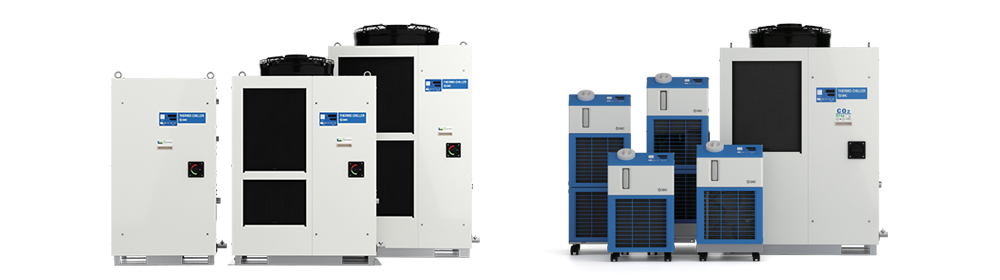
We have a cooling system solution for your facility — whatever the requirements. Our industry 4.0 smart chillers allow you to maintain temperatures within strict limits. They can be controlled remotely, perform self-diagnosis, and record relevant process variables such as pressure, flow, and temperature.
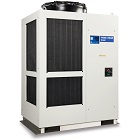
Low GWP Chillers
Low GWP chillers are designed to use refrigerants that have a minimal environmental footprint. They are used in industries that are legally required to phase out their use of older refrigerants such as data centers which run round the clock or semiconductor manufacturers whose facilities need enormous amounts of cooling.
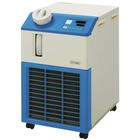
General Use Compact Chiller
General Use Compact Chillers are purchased by people who need precise, localized cooling but don't have the space for a large industrial system. They are versatile enough for a hospital and rugged enough for the demands of a machine shop. They are used by research labs and medical facilities where space is at a premium, high tech manufacturers who need to spot cooling for specific processes, and for OEM designers who need to integrate a chiller into a larger project.
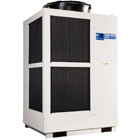
Large Capacity Chiller
SMC’s large capacity chillers are powerful process chillers with a cooling capacity range of 10 to 38 kW. They are designed to precisely and efficiently control temperatures in a number of high stakes environments, including semiconductor, high-power industrial laser operators, electronics manufacturers, medical imaging, and laboratory facilities. With global support, SMC can support your chillers anywhere in the world, and our chillers have the certifications needed for your region.

Rack Mount Chiller
Rack-mounted chillers are specialized temperature control units designed to fit into standard 19-inch equipment frames, maximizing floor space in crowded industrial and laboratory settings. Unlike traditional floor-standing models, these units allow for vertical integration, stacking seamlessly alongside the lasers, servers, or analytical instruments they are designed to cool.
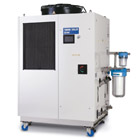
Dual Channel Chiller for Lasers
Dual-channel chillers provide a custom solution for high-power fiber lasers by integrating independent cooling loops for the oscillator and optics into a single, space-saving unit. The HRLF water- and air-cooled chillers are compliant with the EU’s F-Gas Regulation and the U.S. AIM Act. The HRL standard chiller offers cooling capabilities up to 37kW for regions where traditional refrigerants are still in use.
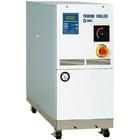
SEMI Standard Chiller
SEMI standard chillers use high-performance double inverter technology to simultaneously regulate both the compressor and the pump, achieving a precise temperature control of up to ±0.1°C under fluctuating heat loads. By integrating environmentally friendly refrigerants like CO₂and R454C, they ensure future-proof compliance with global environmental regulations while maintaining the strict safety and ergonomic benchmarks required by SEMI standards.

High Performance Heat Exchanger
The HRW heat exchanger is a refrigerant-free, water-cooled thermo-chiller designed for high-precision temperature control (±0.3°C) in industrial processes ranging from 20°C to 90°C. It uses an inverter pump for demand-based rotation control. The HRW is used for high-precision temperature control in the semiconductor industry, where it regulates chamber electrodes in etching, spatter, cleaning, and coating equipment.

Benchtop Precision Chiller
Benchtop precision chillers serve a multitude of uses, from general purpose to high capacity, cleanroom ready cooling. The HEF and INR series are compact space savers for benchtop labs, while the INR offers superior low-temperature stability. The HEC-A provides high precision air cooling for medical and laser equipment. The water-cooled HEC-W5 and HEC-W2 models are designed for cleanrooms and high power semiconductor processes where heat and vibration must be piped away rather than exhausted into the room.
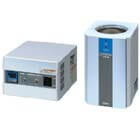
Circulating Bath
The HEB-W is a complete, all-in-one solution for high-precision laboratory and semiconductor cooling, while the HEB-H tank and HEB-C controller are specialized parts for repairs, custom builds, and modular system integration. The tank uses Peltier elements and pumps to physically move and temper fluid and the controller PID logic to maintain thermal stability as precise as ±0.1°C. The HEB-W provides a silent, vibration-free alternative to traditional compressor based chillers for sensitive applications like microscopy, reagent cooling, and electronics testing.
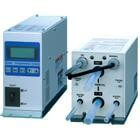
Benchtop Chemical Chiller
The HED is a specialized Peltier-type temperature control system designed for the direct cooling and heating of corrosive and high-purity chemicals in semiconductor and laboratory environments. The system comprises three products: the HED-C controller - the digital brain and power supply, the HED-H heat exchanger, and the HED-W - a pre-configured set containing both units. It achieves a high temperature stability while maintaining a compact, vibration-free benchtop footprint.
See how you can achieve process stability and energy efficiency in this overview of SMC’s temperature control equipment. Whether you need compact cooling or high-capacity temperature control, this video showcases the advanced inverter technology and dual-channel solutions available to optimize your cooling processes.
Industrial Chiller FAQ's
How do chillers ensure precise temperature control?
SMC chiller refrigeration circuits combine the inputs of pressure and temperature sensors with controller software to command electronic expansion valves to maintain the specified temperature control precision. The exact details of the software, component selection, and circuit configuration are proprietary. Some industrial chillers also use inverters on the rotating components (compressor, air cooling fan, and coolant pump) to improve energy efficiency.
How does industrial chiller efficiency impact operating costs?
Heat is an unwanted side effect of many industrial processes. Machining tools generate heat while mechanically removing material. Lasers and welders generate heat in order to produce the energy for cutting or joining. Servers in data centers produce heat through the passage of electrons through highly miniaturized circuitry while processing extreme amounts of data. This heat is unavoidable with today’s equipment designs. However, the heat can also damage the equipment and process efficiency can also be compromised. Using a chiller and coolant circuit can remove heat, bringing equipment temperatures into safer and more reliable ranges.
In life science and food / packaging applications, some processes have a necessary or at least optimal temperature range in which they must operate. Higher temperatures could burn materials such as hot melt glues. Lower temperatures could prevent a reaction from occurring, such as melting again. Higher or lower temperatures could deteriorate the success of chemical or biological reactions. Chillers add value by enabling and controlling these processes in the optimal temperature ranges.
What features distinguish SMC industrial chillers from others in the marketplace?
Material selection and structural design insure the physical integrity of each chiller. Industrial chillers are electrically powered with computer chips, circuit boards, and numerous sensors, along with traditional wire harnesses and components such as resistors, capacitors, and power supplies. Motorized components with moving parts include fans, compressors and water pumps. Every component must be selected to balance cost, life cycle, weight, dimensions and energy consumption. Then, the manufacturing processes must be regulated by quality standards and rigorously monitored and tested for successful adherence to those standards. Control of all of these aspects – engineering and design, supply chain, and manufacturing – result in SMC’s highly competitive market position.
How does an industrial chiller work?
There are four core processes in the vapor-compression cycle – compression, in which the compressor increases the pressure and temperature of the refrigerant gas; condensation, in which the condenser releases heat (which is cooled by the chiller’s fan or an industrial water supply), turning the refrigerant gas into liquid; expansion, in which the expansion valve lowers the gas pressure; and evaporation, in which the evaporator absorbs heat from the process / equipment’s coolant loop (circulated by the chiller’s water pump).
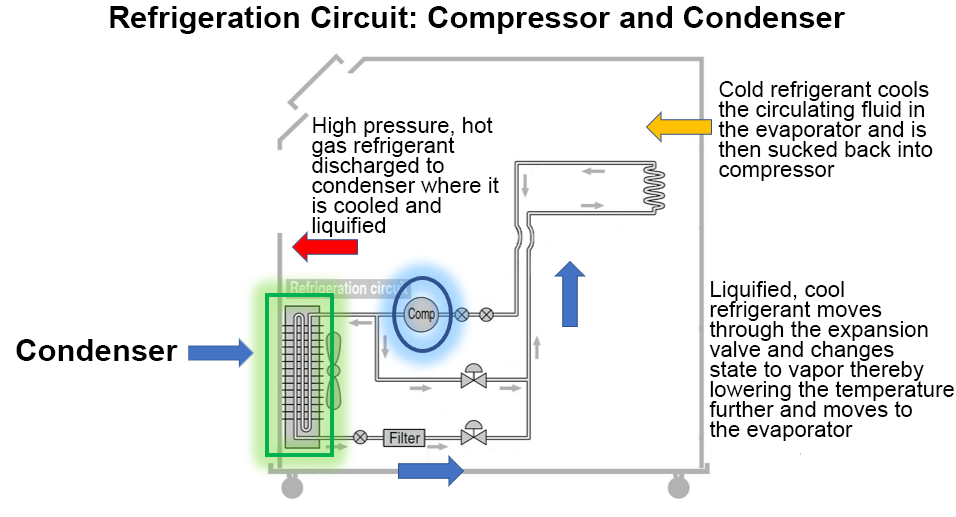
In the case of air-cooled chillers, the high-temperature, high-pressure refrigerant gas is cooled down by fan ventilation in the air-cooled condenser, where it is then liquefied. In the case of water-cooled chillers, the gas is cooled by the facility water in the facility water circuit in the water-cooled condenser, where it is then liquefied.